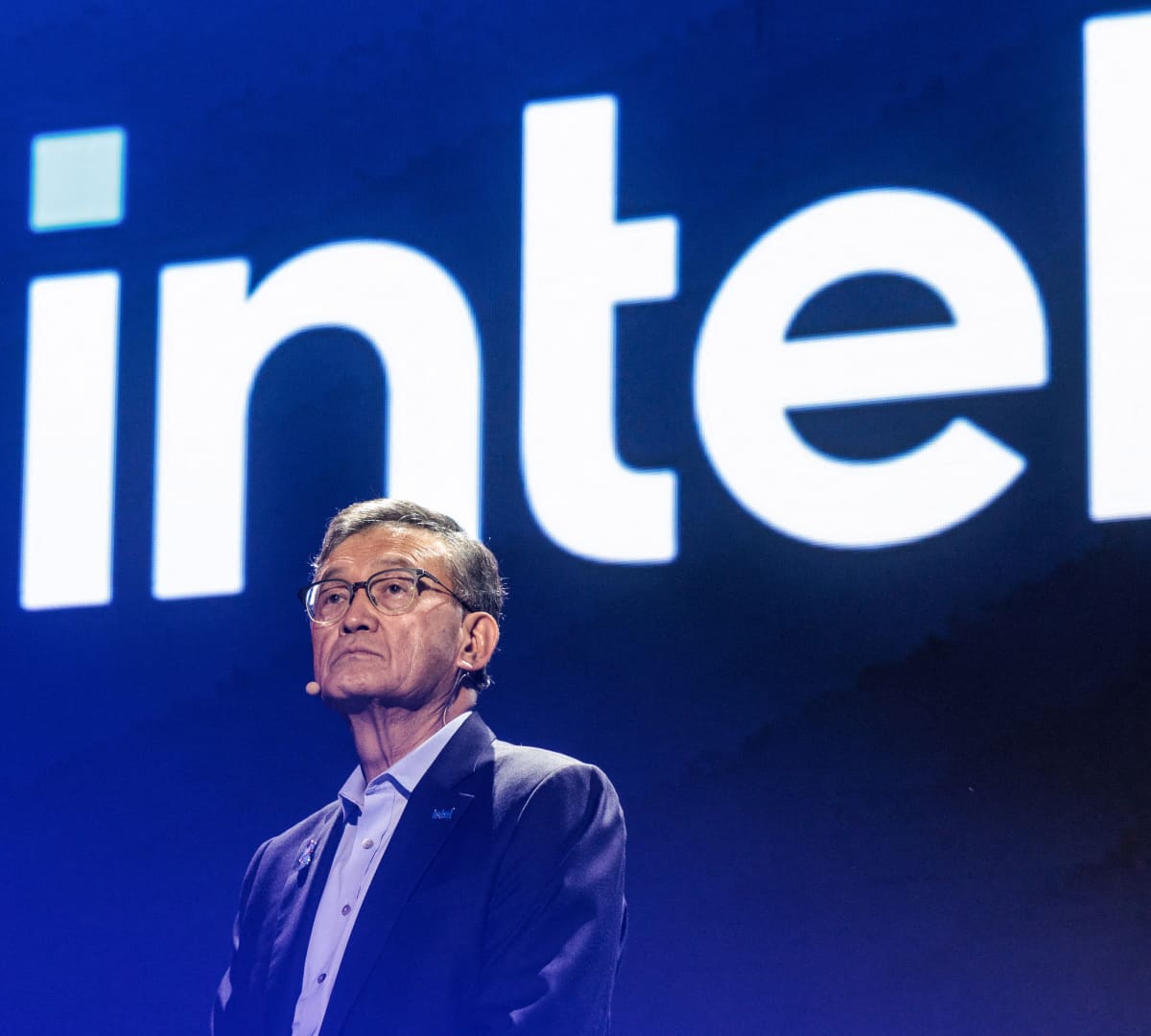
Intel shares plunged in extended trading after the chipmaker forecast fourth-quarter revenue of $15 billion to $16 billion and adjusted earnings of 25 cents per share, well below analyst expectations of $17.1 billion and 43 cents, according to LSEG. The stock had climbed about 150% this year before a roughly 23% slide in October, so the drop lands on a company whose valuation had already priced in a lot of optimism.
The core problem is the client computing business. Revenue in that group fell 5% from a year earlier to $8.1 billion and missed estimates, even as data center and AI revenue jumped 78% to $7.3 billion. Counterpoint Research says global PC shipments fell 4% in the second quarter, and Intel's finance chief, David Zinsner, now expects the PC slowdown to last at least through the first half of next year. Intel blames soaring memory and component costs, which is a fair explanation, but it does not change the arithmetic: the company's oldest franchise is shrinking while its growth story depends on agentic AI workloads that still need proof at scale.
The Israel fab explosion that killed two workers adds a separate cost. Zinsner told Reuters the incident will cost about $600 million in lost revenue over two quarters. Investors should watch whether the planned restart of production by the end of the week holds, because any further delay would compound the guidance miss.
Intel's foundry ambitions deserve sober attention too. The company is the only U.S.-based maker of advanced logic chips and is in high-volume production of its 18A chip in Arizona, and TechInsights analyst Dan Hutcheson says a major fabless customer could pick Intel for its next chip, 14A. But Intel remains the only major customer of 18A so far, and the Ohio fab that was originally expected to deliver chips in 2025 is still under construction. CEO Lip-Bu Tan has taken a more cautious approach to foundry spending than his predecessor, Pat Gelsinger, and that caution looks increasingly sensible.
What should happen next is simple. Intel should show that its CPU business in agentic AI is a durable profit engine, not a headline, and it should prove that outside customers will commit to its foundry before it spends more. The Oracle deal for next-generation Xeon processors is a positive sign, but one contract does not reverse a shrinking PC base. Until Intel can point to steady client revenue and firm foundry commitments, the stock's recent run looks more like hope than a durable recovery.