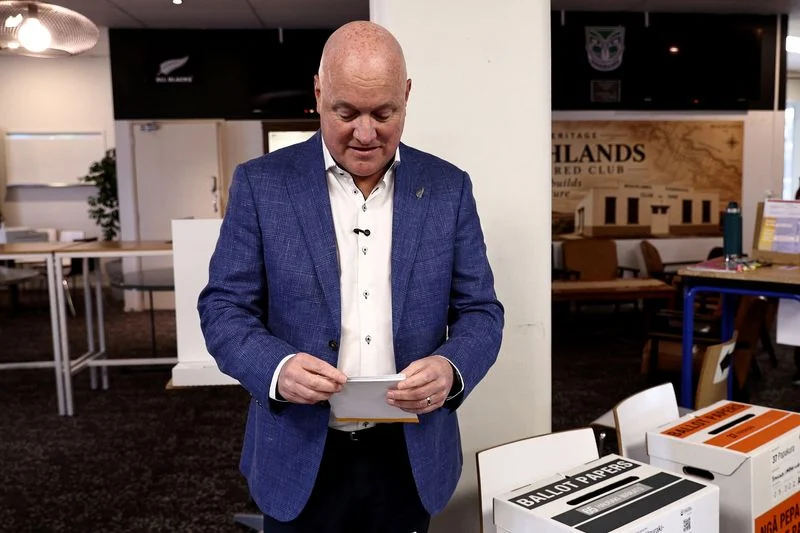
New Zealand's general election on November 7 centers on the cost of living, according to a Reuters report from Lower Hutt. The report says rising prices leave 70-year-old part-time bus driver Liz Hartley with little money by the end of the week. She plans a tactical vote in the Hutt South constituency to deny reelection to National Party incumbent Chris Bishop.
Bishop told Reuters that voters want a plan to "move the country forward and drive prosperity." He said, "My sense is that our economic plan is beginning to work, and we need more time to see it through."
The report says New Zealand is struggling to fully shake off a recession, three years after National won the 2023 election on promises to cut inflation and government debt. It says the National Party argues it has laid the foundations for future growth.
The report describes a divide between regions. It says tourism and higher agricultural exports have supported rural areas, especially on the South Island, where second-quarter retail spending rose 8.6% on the year. Consumer spending in urban areas such as Auckland and Wellington rose 5.8%. Unemployment fell 0.6 percentage points in the South Island but rose 0.7 points in the North Island over the period. House prices are down almost 30% from their peak in Wellington and 24.7% in Auckland, compared with a 17% national drop.
Political commentator Grant Duncan said National's economic reputation has not held up. Political commentator Liam Hehir said National's message that the benefits will arrive soon is harder to sell. Kiwibank Chief Economist Jarrod Kerr said, "A third of the economy is doing really well, and two-thirds are still trying to find their feet."
The report says polls show no clear path to a governing coalition. It names the centre-left Labour coalition, which proposes a larger government role, and the Opportunity Party, led by Qiulae Wong, as options for voters.