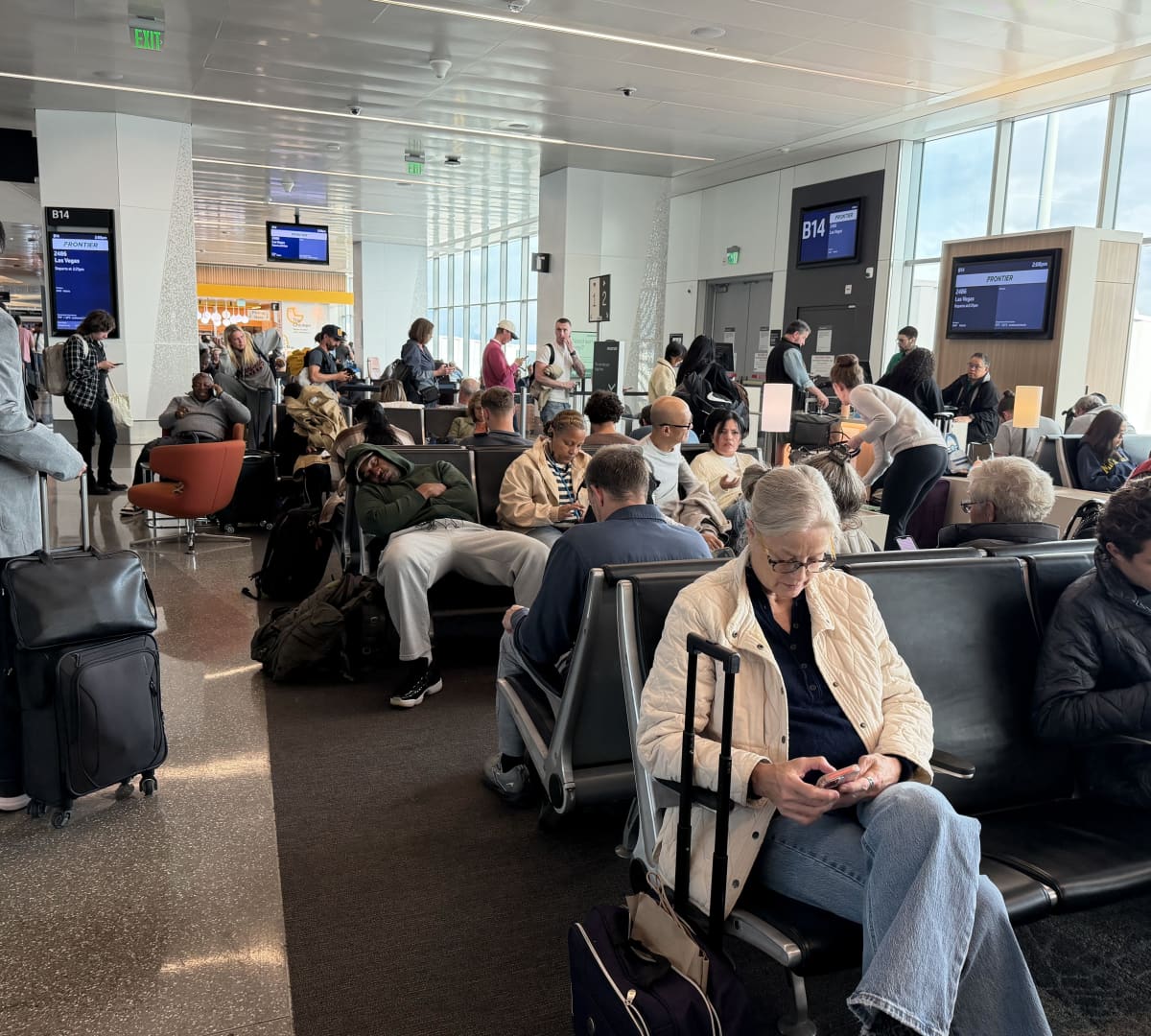
Flight disruptions were still rippling through the country on Saturday, long after the Federal Aviation Administration lifted its nationwide ground stop. More than 3,000 U.S. flights were canceled and close to 1,000 were delayed as of 5:45 a.m. ET, according to FlightAware. That comes on top of about 9,000 cancellations and more than 7,000 delays on Friday, although the report notes that some of those disruptions were caused by bad weather.
The FAA's halt on departing flights lasted more than four hours and was the longest nationwide ground stop since the September 11, 2001 attacks. Transportation Secretary Sean Duffy said routers were overloaded with data and began giving air traffic control centers inconsistent information, and he blamed outdated infrastructure. Trump administration officials said the event did not appear to be a cyberattack. Whatever the precise technical failure, a system that handles the world's busiest airspace should not be brought to a standstill by an equipment problem.
Duffy's answer is that Congress needs to approve more money to overhaul air traffic control. He is right that the country's aging equipment and shortage of air traffic controllers have been a long-running problem, and airline executives have complained for years about the cost of resulting disruptions. Lawmakers should not treat this weekend as a one-off story. They should fund the modernization plan and attach clear deadlines and accountability to it.
The disruption also reached well beyond airline passengers. NBA, NHL and college teams struggled to reach their destinations in time for games, and the Southeastern Conference moved some contests to Sunday. Duffy suggested that college football teams on charter flights could receive priority, but a fix that depends on individual teams calling the FAA to schedule their flights is not a plan. Priority access for some travelers while others are stranded only highlights how little slack the system has.
The Thanksgiving travel period is a reminder that these failures are costly and predictable in their timing. Airlines are deploying spare planes and crews to get people where they need to be, but the burden of recovery falls on passengers and workers. The FAA says it tested its systems before resuming operations, and that testing should be the baseline, not an apology. Federal officials should explain exactly what failed, publish a timeline for repairs, and make clear that the next holiday weekend will not depend on luck.