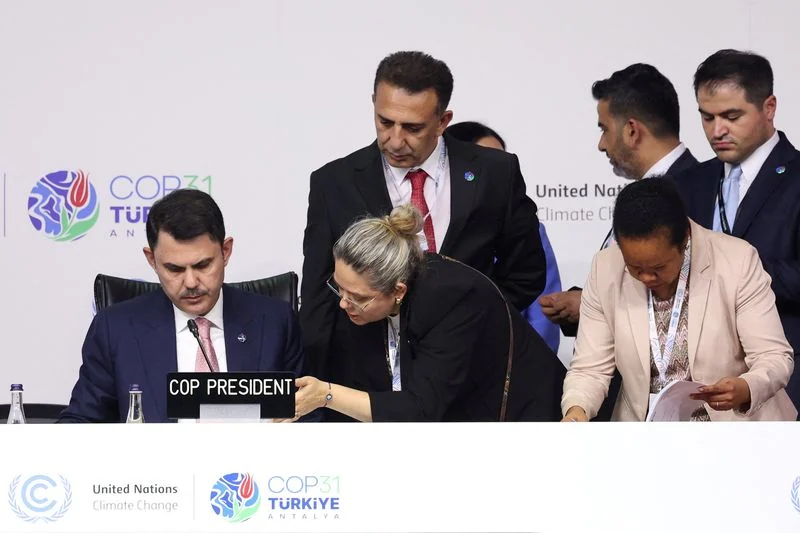
UN climate talks in Antalya, Turkey, ended in collapse on Sunday after the European Union and others rejected a final deal put forward by COP31 presidents Turkey and Australia, Reuters reported. The EU and others said the text was too weak to advance the fight against global warming.
More than two weeks of negotiations ran two days into overtime, making it the longest COP on record. No deal was reached.
Turkey's conference president, Murat Kurum, told the closing plenary: "There is nothing to do. We did all that we could." He said he would not advance any new text, then left the stage while some country representatives were still speaking.
Chris Bowen, Australia's COP31 president of negotiations, said the outcome was "very disappointing." He said disagreements over fossil fuels and climate finance were obstacles to a deal.
UN Secretary General Antonio Guterres said: "I share the very profound frustration of all those who expected governments to rise to the moment the climate crisis demands."
Ireland's environment minister, Darragh O'Brien, said the EU could not support the proposed deal in part because it did not mention fossil fuels. He said it was "unconscionable" for a climate agreement to make no reference to fossil fuels or to transitioning away from them.
Observers at the summit said Saudi Arabia and other big oil-producing countries lobbied to keep any mention of fossil fuels out of the text. The Saudi delegation said at the closing plenary that it was surprised at resistance to what it called a concrete solution to global warming. Critics of the proposed deal said its carbon-removal language could be used as a license to keep pumping oil.
Developing countries criticized the deal for not providing sufficient climate finance to help them adapt. The text called for tripling such finance but did not specify a baseline. It also set a goal of raising electricity's share of total final world energy consumption to 35% by 2035, from about 23% now. Critics said this could force more costs onto poor nations without a clear path away from fossil fuels.
Belgium's climate minister, Jean-Luc Crucke, called the outcome difficult but "not the end of multilateralism." He said: "There has to be courage to say no."