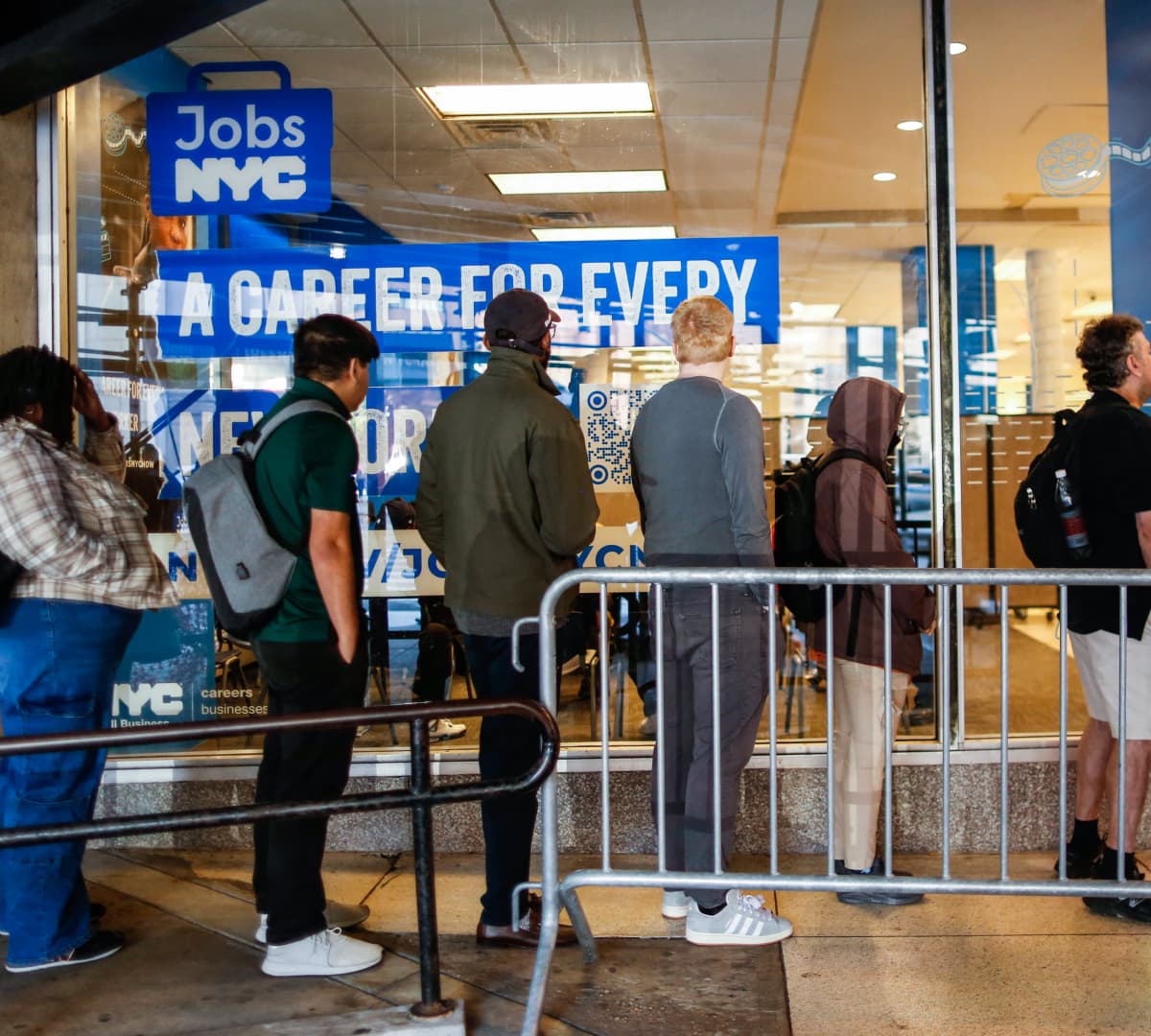
The headline numbers look good, and that is exactly the problem. Nonfarm payrolls beat economists' forecasts for October with 165,000 added jobs, and the unemployment rate ticked down to 4.1%, slightly lower than economists predicted. Job openings also came in well above expectations for September, and the number of workers quitting jobs spiked to levels not seen since March 2025. Taken alone, those figures suggest a labor market in good health.
But the same Bureau of Labor Statistics data shows a different story for people who have already lost their jobs. The average jobless worker's spell of unemployment surpassed 27 weeks in October on a seasonally adjusted basis, roughly seven months of searching. About 2 million Americans have been without work for at least 27 weeks, and the long-term unemployed made up 27.6% of all jobless workers, the highest share since late 2021. Cory Stahle of Indeed put it plainly: over a longer time horizon, there is no mistake in the trend.
Policymakers and the business press should stop treating these two realities as separate. A market where companies avoid layoffs but also avoid hiring is a market where a laid-off worker can wait months with little prospect of a quick return. The Federal Reserve Bank of Richmond researchers warned that time spent unemployed may itself reduce the chance of finding a job, because skills depreciate, networks thin and employers read long gaps as a negative signal. Stahle also noted that the average unemployed person now takes longer to find work than their benefits last, which is a key point the headline figures obscure.
The human cost is documented, not hypothetical. Research cited in the report links long-term unemployment to depleted savings, lower earnings potential and declining mental health. Recent high-profile cuts, including Disney's reported plans to axe thousands of jobs and American Express's 5% head-count reduction tied to artificial intelligence, help explain why many workers feel the market is not improving for them, as Elizabeth Renter of Life360 observed.
Strong aggregate data is a reason to watch the long-term unemployed more closely, not less. Readers, reporters and officials should judge the labor market by how it treats people who are out of work, not only by the monthly job count. A recovery that leaves nearly seven months of searching as the typical experience for jobless workers is not yet a recovery for them.