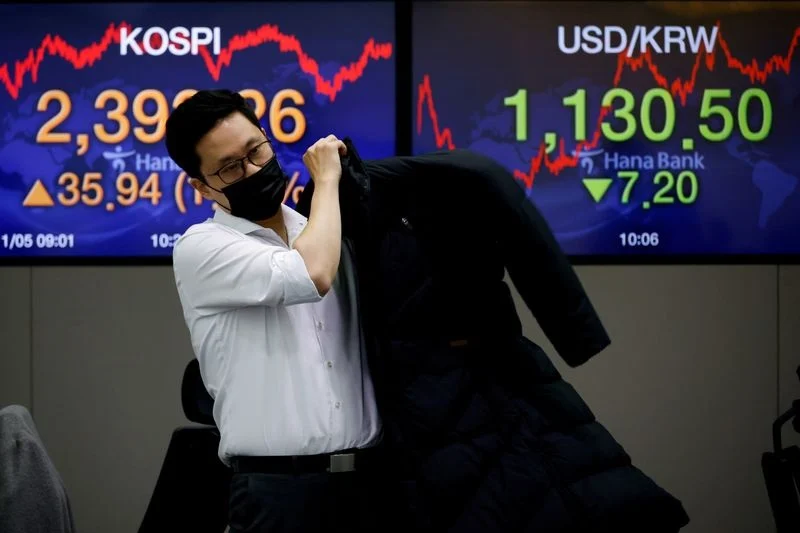
South Korean entertainment stocks jumped on Thursday after Seoul said its trade arrangements with Beijing would widen opportunities for Korean content companies. Studio Dragon rose 30% to 30,800 won, CJ ENM climbed 22.4% to 51,600 won, and HYBE gained 12.4% to 187,300 won. The rally was sharp, and it was not universal: YG Entertainment added only 0.9% to 47,300 won, and the benchmark KOSPI still fell 0.5%. Markets clearly liked the news. The question is whether they liked it for the right reasons.
The most important element of the report is the commitment that China will grant South Korean companies most-favoured-nation treatment in sectors including movies and games. The report describes this as a first in trade negotiations between the two countries, and it would ensure Korean firms receive treatment no less favourable than competitors from other countries. Beijing has also pledged non-discrimination principles when evaluating South Korean content. Those are meaningful words. They are also words, and the report does not describe how they will be implemented, how quickly, or what enforcement will look like.
The arrangements also include cooperation on joint television production, covering dramas, animation, entertainment shows and documentaries, along with permission for South Korean travel agencies to operate in 23 regions. The report links all of this to restrictions imposed since 2016, after tensions over the deployment of the US THAAD missile system. Those curbs affected entertainment, tourism and cosmetics. A reversal of that history would matter to the companies named in the report, but investors should recognise that the report describes a negotiated framework, not a finished opening of the market.
The tourism figures make the stakes concrete. Chinese tourists accounted for nearly 29% of foreign visitors to South Korea in 2025, the largest share among inbound travellers, and they spent an average of $1,504 per trip, 13% more than the average foreign visitor. If travel agencies can operate more freely, that demand could reach a wider set of businesses. Still, the report offers no projection of how much of that spending will return, and no evidence yet that the stock gains reflect expected earnings rather than relief.
My view is that the government should now publish the implementation timetable and the criteria that will be used to judge compliance, and that investors should wait for those details before treating the rally as a durable repricing. The bilateral services and investment trade covered by the negotiations is worth around $38.8 billion, according to a joint ministerial statement, which makes the agreement important. Importance is not the same as certainty. Until Beijing's commitments show up in licences, releases and revenue, a one-day surge of 30% should be read as a promise being priced, not a profit being earned.