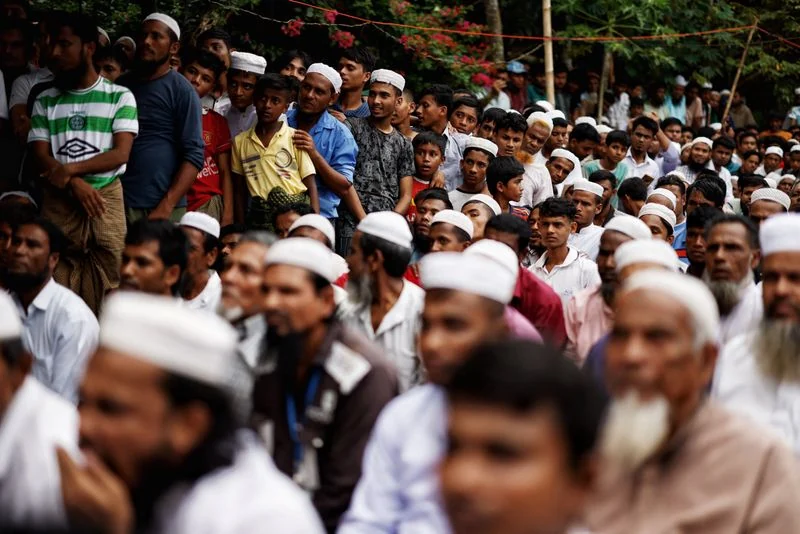
The International Court of Justice has found that Myanmar committed genocide against the Rohingya during the 2017 military campaign, and that verdict matters. Thousands of refugees in the camps of Cox's Bazar celebrated it, and they had reason to. For a people long treated as illegal migrants and denied citizenship, an official finding that their suffering was genocide is a form of recognition that cannot be dismissed.
But recognition is not return, and the report makes clear how far apart the two remain. About 1.2 million Rohingya live in Bangladesh, and Myanmar has verified 308,797 of them as former residents of Rakhine State. Yet Myanmar says repatriation will begin only when security conditions improve, and the Arakan Army now controls nearly all of Rakhine State, including the areas where most refugees would return. An analyst quoted in the report, Sai Kyi Zin Soe, put the likelihood of a safe return at low. I think that assessment is the honest starting point for anyone who wants to talk about next steps.
Bangladesh's foreign minister, Humaiun Kobir, offered a timeline of one to one and a half years and said Dhaka would press multilaterally for safe passage. That is a reasonable goal, but it is hard to see how a timeline can be kept when the state the court found responsible rejects the verdict as unjust, and when Dhaka must now negotiate with an armed group that has made no public comment. The judgment strengthens Bangladesh's legal position, as the report notes, but it also deepens the dilemma Dhaka faces.
The money problem is just as pressing. Only about 69% of the $710 million in humanitarian funding required for 2026 has been met, according to UN data, and Bangladesh does not allow the Rohingya to earn a living. A government that is cash-strapped, hosting a population its own officials say cannot stay indefinitely, cannot solve this alone. Meanwhile Malaysia, which has registered 133,400 Rohingya refugees and asylum seekers, plans to resettle 10,000 in Turkey, a separate track that shows how fragmented the response has become.
What should happen next is clear enough. Donors should fund the camps in full rather than letting them slide into neglect, and any repatriation plan should be judged by citizenship, rights and genuine security, as the Arakan Project's Chris Lewa argued, not by diplomatic deadlines. The ruling should be used to keep pressure on Myanmar, but no return should be pushed through while people remain confined and vulnerable. For Mohammed Zubair, the 24-year-old in the camp, the dream is to walk freely on his ancestral soil. The court has named what was done to his people. Making that dream possible is the harder task, and it is still undone.